
100+ Years of Early Jazz in Denver and the Front Range
By Peg Isakson, September 2026
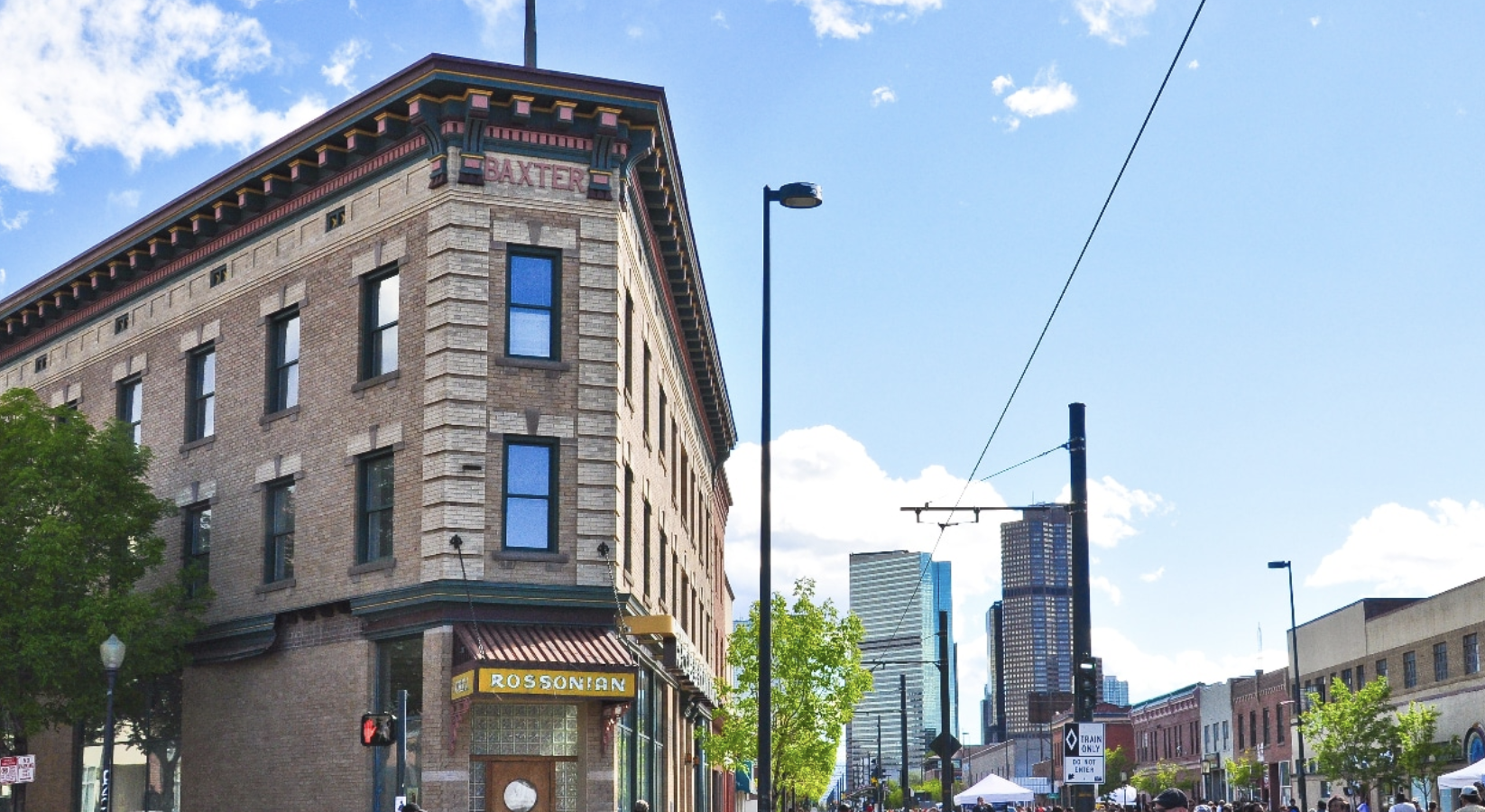
We begin this piece of Colorado history and Early Classic Jazz with Five Points, also called “The Harlem of the West,” where well-known, touring Black Jazz musicians would stay and perform at The Rossonian hotel.
First, you ask, “Where is Five Points, and why that name?”
When the Denver area included a cluster of mining camps (1858), streets were created with angles following Cherry Creek and the South Platte rivers that ran through town. This would give the miners equal access to water they needed in their camps. When mining shifted to the mountains, new streets were platted for Denver, using standard compass points. With angled streets meeting standard streets, a five-point intersection developed—and has stayed that way—being named the Five Points area. You’ll find this area adjacent to Coors Field and Union Station in downtown Denver.
How did traveling Black Celebrity musicians come to Denver?
Five Points was close to a railroad yard, where early trains reached Colorado in 1868. This became a convenient area to live for those who were looking for railroad jobs in the late 1800s and into the twentieth century. The area also became known as “The Harlem of the West1”, reflecting the number of African Americans who were hopeful, hardworking people desiring to own a home and be part of a thriving community.
Denver Union Station was built in 1881, and early passenger trains began arriving soon after. Trains from Chicago and other Midwest points are noted in Wikipedia as early as 1901.
The Jazz Age enthusiasm, beginning in the 1920s, encouraged Black musicians to travel by train or car and share their talents and joy of jazz. National Touring groups saw opportunity in Colorado, in Five Points—and in Lincoln Hills for a safe place to vacation.
The Rossonian Hotel was constructed (as The Baxter Hotel) in Five Points in 1912. This became a thriving spot for Jazz performances, with the Casino Ballroom across the street for dancing. (One of our NoCO Jazz members recalls dancing there). The Rossonian is still standing today, with current plans to restore the building for hotel rooms, space for jazz performances, and dancing. A Jazz Bar is anticipated in 2027, with the hotel opening in 2028.
There are many writings of oral history that mention performances by Louis Armstrong, Duke Ellington, Ella Fitzgerald, Billie Holiday, Count Basie, Billie Ekstine, Langston Hughes, Zora Neale Hurston, and more during the 1920s, 30s and 40s in the Denver area. The details of dates and locations require additional research to validate each performance. The promotion and recordings of Black musical events were “low key” as the Ku Klux Klan became more powerful in Denver, and the political environment could be hostile.
How does all of this lead to a little-known area called Lincoln Hills, on Highway 72, in Clear Creek Canyon near Rollinsville or Pinecliffe, where we can imagine amazing jam sessions held by Black jazz musicians?
Over one hundred years ago, in 1922, forward-thinking leaders E.C. Regnier and Roger Ewalt created the corporation “The Lincoln Hills Country Club Development”. They and other leaders from Five Points and the Whittier communities of Denver worked with the owner of property and miner named Sayre in Gilpin County to purchase and develop this area along the S. Boulder Creek in Coal Creek Canyon and near the railway track construction that led through Moffat tunnel (officially in 1928). Lincoln Hills became a resort of refuge, relaxation, and community for Black families during the time of Jim Crow and the Ku Klux Klan.
“Black Americans did not always share equally in the freedoms our nation promised. Instead of accepting that reality, Black visionaries right here in Colorado built something different. They created a place of refuge. A place of joy. A place where families and young people could experience the outdoors freely and safely.” Jeanette Patterson, editor The July Cares Chronicle, an e-newsletter from Lincoln Hills Cares. www.lincolnhillscares.org.
From Five Points in Denver, it was convenient for families and visiting Black musicians to ride “The Dinky”, a small train that stopped near Lincoln Hills—or to drive from Denver on Highway 72 for approximately one hour. A gas station in Lincoln Hills was available for Black visitors to refresh vehicles and drivers. This area was listed in The Green Book2, beginning 1936, as a safe place for African American travelers to enjoy family, peace, comfort and music in the Rocky Mountains.
In 1922, this property was laid out for approximately 1700 lots to be purchased and to build cabins. A few remain from one hundred years ago including the Zephyr View, a legacy cabin built by William Pitts in 1926 and maintained by the Hon. Gary Jackson family. This was the first cabin built and can be seen at the entryway into Lincoln Hills from South Beaver Creek Road. It is now a designated Gilpin County History building.
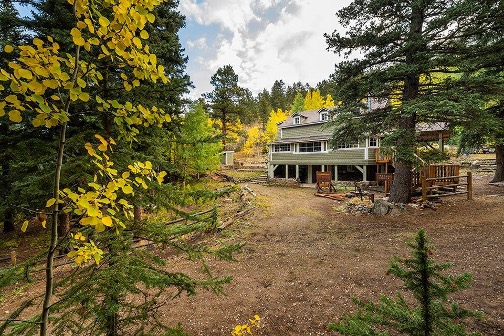
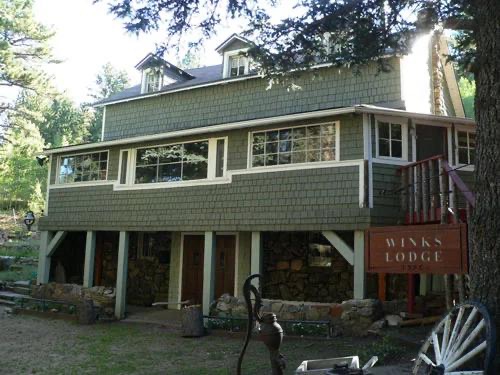
A prominent entrepreneur and leader Obrey Weldell “Winks” Hamlet (1893-1965) is credited with high regard for many buildings, including Winks Tavern, a dance hall and nightclub, The Honeymoon Cottage, made famous by Lena Horne’s visit, Camp Nizhoni, a rent-free building for young girls and women with YWCA activities and songs at campfires or in bunkhouses, and Winks Panorama Lodge, a three-story, six-bedroom lodge completed in 1928, where Jazz Jams brought the hills alive with music.
Wink’s Tavern in Lincoln Hills became a dance hall and nightclub, drawing people from Pinecliffe, Rollinsville, Nederland, and nearby cabin dwellers Gilpin, Boulder, and Jefferson counties. It was a musical gathering point for Denver, for the mountain communities, and for travelers from many states.
Just imagine the spontaneous jazz performances and lively music reverberating in canyon walls!
Winks continued his vision for Lincoln Hills from the early 1920s to his death in 1965. In December of 2023, the US Secretary of Interior Deb Haaland designated Winks Panorama Lodge as a National Historic Landmark.
“The story of Winks Panorama Lodge is one of joy and ingenuity. While much of the Black experience during the Jim Crow era was painful and often deadly, Winks Panorama Lodge was a Black oasis in a welcoming Gilpin County, Colorado.” Gary M Jackson https://www.historycolorado.org/story/2026/02/11/life-resilience-love-and-legacy
How can you learn more and visit Lincoln Hills?
The Lincoln Hills Cares Foundation is presenting “Lincoln Hills Days” for the public. The first date of Saturday, October 3rd is sold out. They may choose another Saturday in October. Info at www.lincolnhillscares.org Choose: Get Involved/LincolnHillsDays2026.
Alternatively, contact us and let us know if you would like to tour Lincoln Hills in a NoCO Jazz group on a weekday. Our list of names would be on their Wait List.
- The tour would most likely be late morning to mid-day.
- Transportation and lunch would be on your own.
- The tour is a hike of ½ mile at 8200 ft. elevation, with mobile ADA cart for 5 people.
- A map of the location in Coal Creek Canyon (Highway 72) can be emailed to you.
- The tour is at no charge, although donations are encouraged.
If you’re interested, please let us know if you prefer a weekday or a Saturday
References for Lincoln Hills
https://LincolnHillsCares.org Sign up for The Cares Chronicle, an e-newsletter
COMING EVENT: Lincoln Hills: A Journey of Hope, Heritage and Legacy
More info: https://LincolnHillsCares.org
Denver Public Library. Lincoln Hills records
Rocky Mountain PBS. Colorado Experience. Documentary Film Series
https://coloradoencyclopedia.org/article/lincoln-hills
https://www.historycolorado.org/2021/04/14/shelter-harsh-times
https://www.npr.org/2022/05/29/1101973274/celebrating-the-legacy-of-lincoln-hills-resort
Https://PEHC.COLOSTATE.EDU “Lincoln Hills and Black Recreation in the Colorado Mountains”. August 28, 2020
Original post: History Colorado website (https://www.historycolorado.org/story/2020/08/28/health-recreation-education-and-uplife-lincoln-hills-and-black-recreation-colorado)
https://video.pbs12.org/video/studio-twelve-ep-40-black-history-month-colorado-voices-cultural-legacy-icfmrw/ Lincoln Hills is presented in the first ten minutes of Colorado Stories from Studio Twelve in this video.
Retired Honorable Gary Jackson interviews and writings regarding his family history remembering Lincoln Hills and the vision for the future:
- wvtf.org – NPR Weekend Edition Celebrating the legacy of Lincoln Hills
- citycast.fm audio/podcast for Denver episode Lincoln Hills has Offered Nature and Relaxation
- boulderlibrary.org Oral History with Gary Monroe Jackson through the Carnegie Library for Local History
Personal story from Gary Monroe Jackson for Winks Panorama Lodge and History Colorado – A Family History of Colorado’s New National Historic Landmark, March 29, 2024
https://www.historycolorado.org/story/2026/02/11/life-resilience-love-and-legacy
Peg Isakson
September, 2026