
Bix and the “Old Gold Special” Train
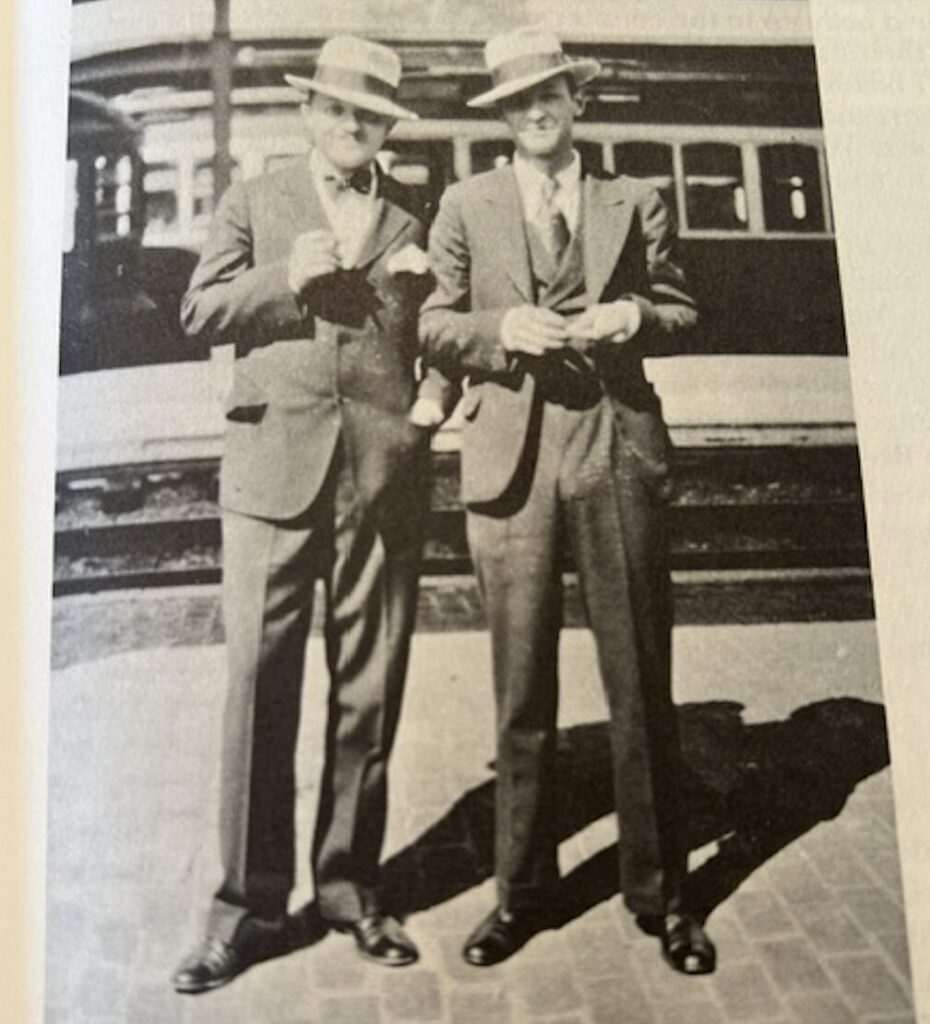
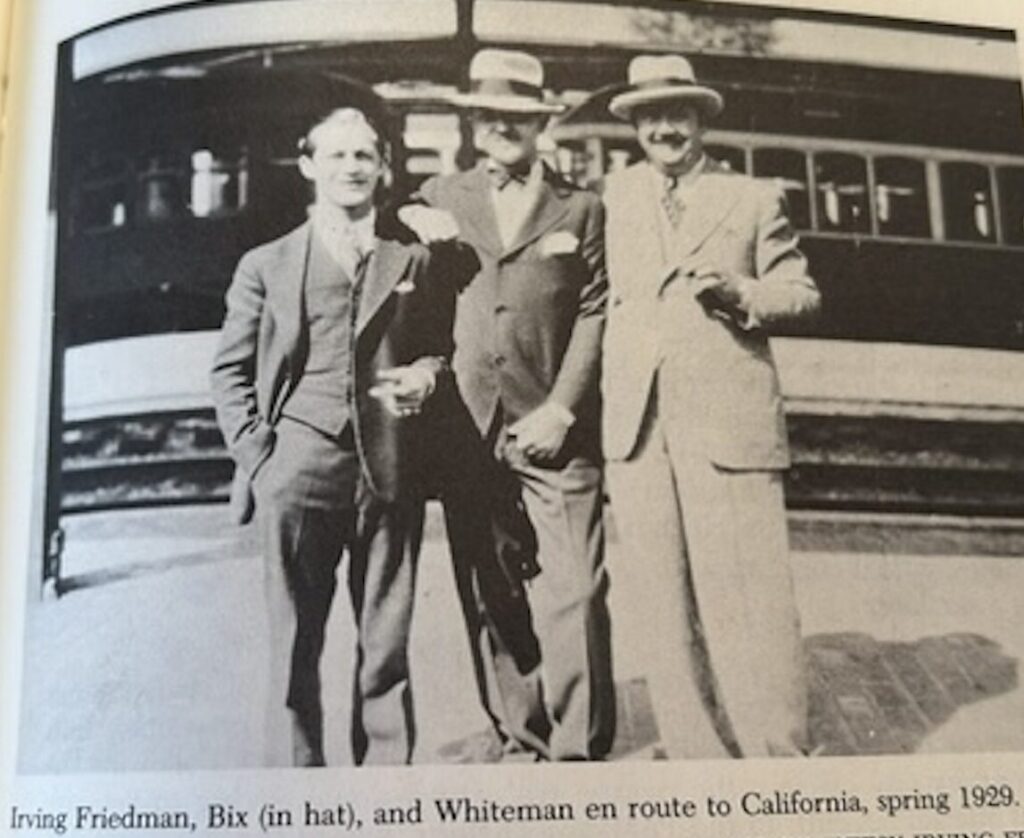
The early and late years of Bix Beiderbecke’s life held experiences and were influenced mainly with riverboats, lake parties, and university galas or dances. “Bix Loved Riverboats and Parties!” will be posted in another News Beat newsletter. The article below gives detail about Bix on a train tour with Paul Whiteman and his visit to Colorado in 1929.
Bix Joins the Paul Whiteman Orchestra in 1927
In September of 1927, Bix and his band-leader friend, Frank Trumbauer (nicknamed Tram) realized that their gigs, recordings, and rehearsals were not going well. Serendipity intervened when Paul Whiteman observed and appreciated their talents while working in Indiana. Whiteman asked them to join his orchestra in October of 1927. He had also hired Bing Crosby with “The Rhythm Boys,” a vocal trio. Many of the songs with Bing Crosby, Bix and Tram can be found on YouTube today. The discography in Bix Man and Legend—a biography by Sudhalter & Evans, 1974—gives details of songs recorded, with the number of bars played by Bix or other musicians, along with Bing’s solos.
Bix and Tram traveled extensively with the Paul Whiteman Orchestra and played in Chicago, Ohio, Michigan, Cleveland, Pittsburg, Baltimore, Philadelphia, Binghamton, and New York—predominantly the Northern states of the East and Midwest. The fifty-man orchestra then boarded a train bound for a four month tour, coast to coast, hoping to end the tour with a film contract in Hollywood. While enroute, they would stop at cities along the train route, including Denver.
BIX and the “Old Gold Special” Train
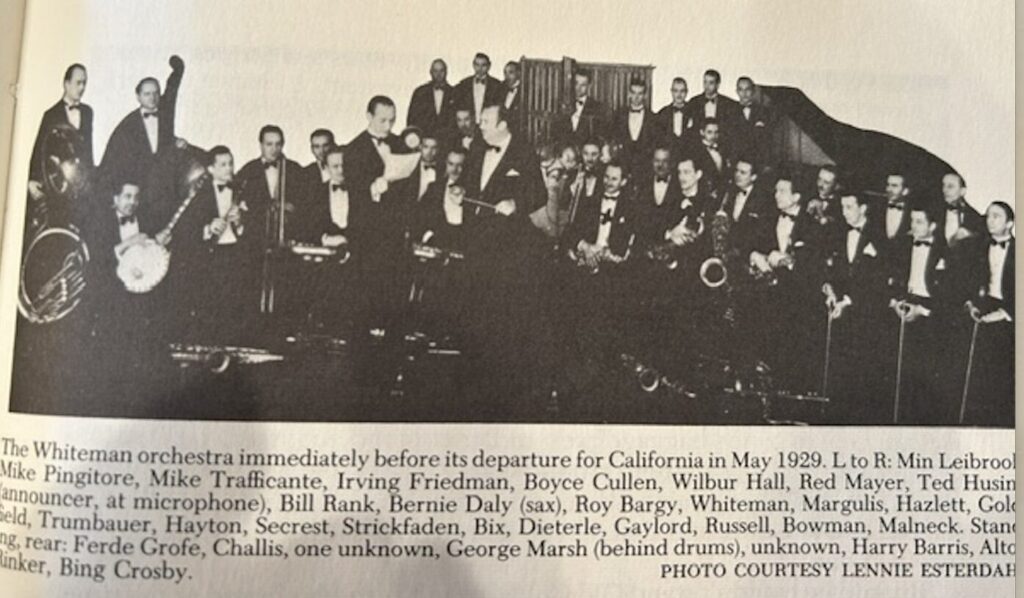
“THE OLD GOLD SPECIAL” with the Paul Whiteman Orchestra traveled from New York to the West Coast in 1929.
Old Gold was a popular brand of cigarettes in the 1920’s through the 50’s. The Lorillard Tobacco Company promoted their Old Gold brand in late ’29 and early ‘30s by sponsoring “Old Gold Presents Paul Whiteman and His Orchestra”, a weekly hour-long show that began in February 1929 on CBS in New York.
In early 1929, Lorillard Tobacco leased an eight-coach train for private use with Whiteman Orchestra musicians, train attendants, and mechanical staff. Whiteman’s contract was to travel across the country from East to West coasts, stopping in towns where the band would play an hour concert that was recorded for radio broadcast from local radio stations. Whiteman’s goal was to begin negotiations for the film “King of Jazz” in Hollywood. (The film can be viewed on YouTube.)
The Old Gold Special left New York May 24th of 1929, with stops in Philadelphia, Cleveland, Fort Wayne Indiana, and Chicago and Springfield Illinois. On May 31st, Bix joined the group when the train stopped at St. Louis. He said good-bye to a girlfriend (of several years), expecting that he would be gone through October. The St. Louis girlfriend commented that Bix looked terrible and walked with a limp or a cane (the result of an earlier brawl in Cleveland). She promised to wait for him to return. Next stops in the Midwest were Kansas City Missouri, and Omaha and Lincoln Nebraska.
The musicians were supplied with cartons of Old Gold cigarettes. Bix would show good manners and accept the cartons at the counter, but later return to the counter and ask for a different brand as well, as if it were for someone else. Bix didn’t like the Old Gold brand, but he felt obligated to accept the cartons to show appreciation.
Bix and the Old Gold Special in Colorado
The next two days, June 3rd and 4th, were spent in Colorado.
When the train stopped in Denver at 8:30 am on the 3rd of June, 1929, everyone was invited to meet Paul Whiteman’s parents and have a quick tour of the city. They would then board a tour bus to see the Rocky Mountains and have lunch at The Placer Inn in Idaho Springs. During these years, The Placer Inn was famous for visitors arriving on tour buses, where they were treated to meals set with sterling silver and fancy linens.
An evening meal was held at the Whiteman family farm, with fried chicken, baked ham, biscuits and more for 50-plus people. The farm was a ranch estate in Arapahoe County, South of Denver. The current address is 2277 S. Tennyson St. in Harvey Park, Denver, and is a private home.
The next day, June 4th, began with a rehearsal at the Shirley-Savoy Hotels, downtown Denver at 17th St. on Lincoln and 17th on Broadway. Bix was in high spirits after weeks of fatigue and recovery from a brawl that was never clearly explained, although band mates had stories to share. They were relieved to see Bix enjoying the relaxation, fresh mountain air, and good food, although he still used a cane most of the time.
The Whiteman concert in Denver was held at the Municipal Auditorium from three to four-thirty and from six to seven. The Old Gold radio show was broadcast over station KLZ. Frank (Tram), with a C melody sax)) and Bix, with cornet, could encourage each other to reach a high level of performance , as they did with “Glad Rag Doll”, “Sweet Georgia Brown” and “Runnin’ Wild”. The playlist and names of musicians are listed in the discography at the back of BIX Man and Legend. You can search for these titles, with Bix playing, on You Tube and also find Bix playing with Bing Crosby. (It’s entertaining to search and listen!)
The Old Gold Special Rolls On
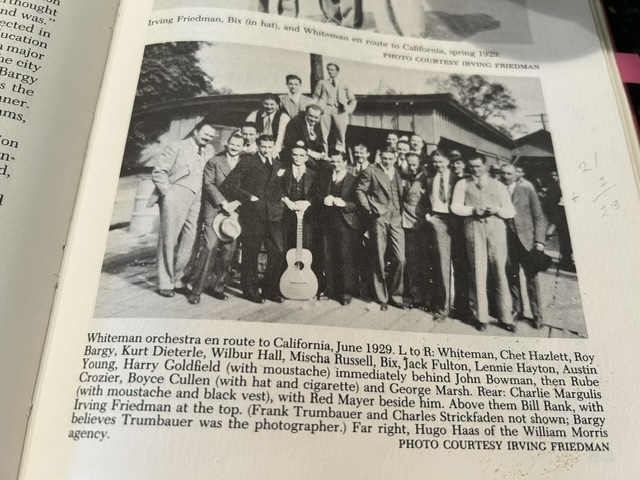
After Denver, The Old Gold Special traveled on to Salt Lake City, to California (with a quick stop in Los Angeles), on to San Francisco and back to Los Angeles for a week’s appearance at the Pantages Theater.
Other weekly performances in California included “Old Gold Presents Paul Whiteman and His Orchestra” recordings for broadcasts on various radio stations. Shows were held at the Majestic Theater, Montmartre Club or the Orpheum Theatre in Southern Cal. The Orchestra also took part in summer festivities at Hollywood Bowl in Los Angeles and Santa Barbara.
An interesting point to recall at this time is that the economic crisis in America began in August, 1929, and during that month, Whiteman became discouraged with Universal studios and their delay of preparations for the intended filming of “The King of Jazz.” Whiteman decided to leave Hollywood and California until a finished script was ready. (By the time this film was ready in 1930, Bix was no longer with the band).
The Orchestra boarded the Old Gold Special for a return trip to New York. Hoagy Carmichael, currently in California, hitched a ride back to Indiana, his home town area, bunking with Bing Crosby. Can we imagine the delightful music practicing on that train?
Back in the New York area in September, Bix did not take part in a Whiteman concert in Long Island, “but remained at a table off to the side for the entire evening.” He began erratic participation with the orchestra.
Weekly broadcasts of the Old Gold radio program resumed in the New York area and recording sessions were held with Columbia. Bix had been struggling with fatigue and drinking for the last month—in California and now in New York. His last recorded solo with the Whiteman orchestra is eight bars of “Waiting at the End of the Road.” Search on YouTube for Bix Beiderbecke Trumbology “Waiting at the End of the Road”
The years Bix was with the Paul Whiteman Orchestra were years of extensive, exhaustive traveling with a very large group. In addition, we remember the financial crisis began in August of 1929. Whiteman showed that he cared for his men and worked to provide opportunities for them. There were daily practices and weekly performances while on the Old Gold Train. He was known to pay his musicians well. In more recent writings, critics have written about Whiteman emphasizing commercialism more than artistic purity for jazz—and also—have noticed the use of an all-white band.
On September 15, 1929, Bix was sent home from New York to Davenport for an extended rest on full salary from Whiteman. In October (the month the stock market crashed) the family admitted him for rehabilitation to the Keeley Institute in Dwight, Illinois. Bix stayed for approximately one month and decided to check himself out before Thanksgiving and go back to Davenport.
Bix attempted to engage with various bands in his home area, traveling to Chicago, Michigan, and New York to “Keep On.” In May of 1931, he joined the Dorsey Brothers (Jimmy and Tommy) at Yale, with Gene Krupa on the drums. He played several small university gigs as he did in previous years. When living alone in a New York apartment, Bix passed Aug 6th, 1931, from a combination of pneumonia and alcoholism.